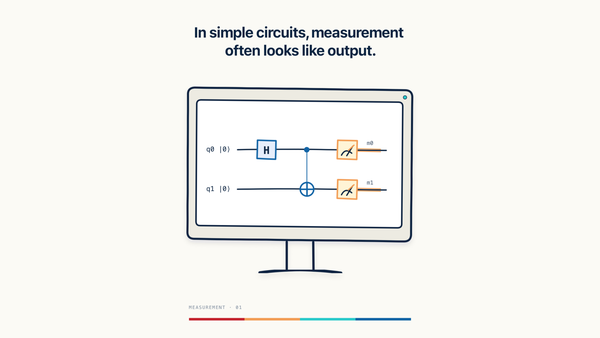
Beyond the Measurement
- Date
A machine can return every measurement correctly, but error-corrected quantum software must preserve the structure and meaning that make those results useful for reliable execution.
We publish when there’s something worth saying: a research result, a tool release, a partnership, or a technical decision that changed how we think about the stack. This is where we share what we’re learning as we build the software infrastructure for fault-tolerant quantum computing.
A machine can return every measurement correctly, but error-corrected quantum software must preserve the structure and meaning that make those results useful for reliable execution.
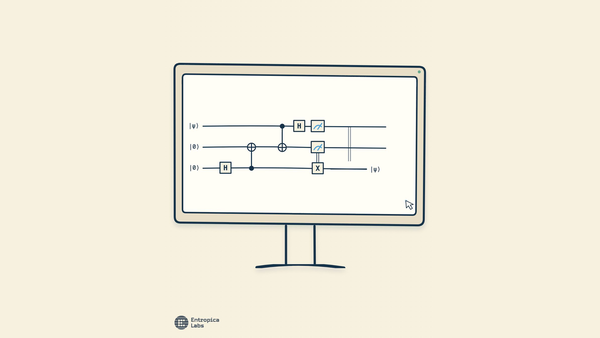
Quantum circuits are only the starting point. Reliable fault-tolerant execution requires a software stack capable of representing, preserving and acting on error-correction information throughout the computation.
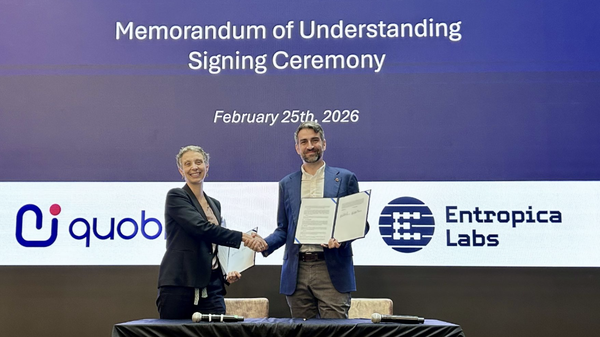
The partnership embeds error correction at the architectural level, enabling hardware-software co-design for scalable silicon-based quantum systems, demonstrating that real-world quantum computing requires hardware and software to be designed together from the start.

Entropica Labs and Yaqumo Inc. sign a collaborative MOU to advance system-level co-design for fault-tolerant quantum computing, aligning hardware and software development as quantum systems scale.

New research shows why scalable quantum error correction requires a system-level approach across hardware, software, and classical processing.
At Q2B Silicon Valley, Tommaso joined Gilad Ben-Shach to present Entropica’s work with Quantum Machines on a real-time testbed for end-to-end quantum error correction, a step toward “Plug-and-Play QEC”, where QEC designs can run directly on real hardware. The goal was to create a fast feedback loop so QEC schemes can be tested, refined, and made reliable in practice.

Leo from Entropica, will introduce Loom Design at the Qiskit Fall Fest in Paris, showcasing our new tool for exploring quantum error correction through intuitive, hands-on learning. It’s an early look at a platform designed to help users understand, experiment, and shape the future of QEC.
At AQC25 in Boston, Vishal presents our collaboration with Quantum Machines, showing how quantum error correction and control hardware can work together in real time. Using Loom and QM’s OPX, we demonstrate how software-driven automation can bridge quantum control and error correction — a key step toward fault-tolerant quantum computing.

Leonardo Disilvestro (Head of Integrations) will show how we’ve integrated Loom (Entropica Lab’s platform for designing, automating, and orchestrating QEC research) with Catalyst, Xanadu’s quantum program compiler. The combined workflow lets researchers specify and run complex QEC protocols as a single, coherent program to streamline QEC development.
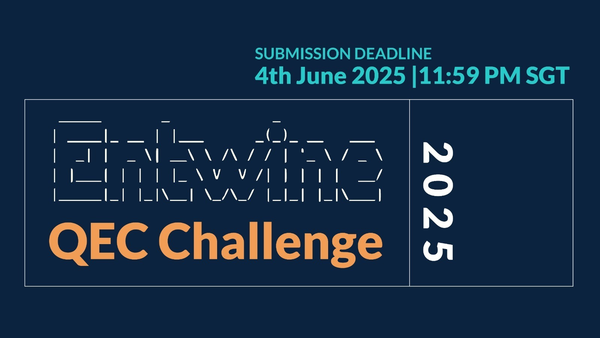
Entropica has launched a two-week global challenge inviting researchers, students, and builders to explore quantum error correction using Entwine, a visual tool for designing and testing fault-tolerant schemes. Participants will have the chance to showcase their ideas, win prizes, and contribute to the future of scalable quantum computing.

Entropica Labs and Xanadu are teaming up to push quantum computing towards fault tolerance! By integrating Xanadu’s open-source tools, PennyLane and Catalyst, with Entropica’s EKA—a novel data structure for quantum error correction (QEC) codes—we’re tackling one of quantum computing’s biggest challenges: efficient qubit usage.
Entropica Labs is pleased to announce the appointment of Dr Chad Rigetti, former CEO and Founder of Rigetti Computing, to its Board of Directors.

Entropica Labs is thrilled to have been awarded the Startup SG Tech grant by Enterprise Singapore, empowering us to advance our quantum error correction technology and drive the adoption of quantum computing.
Compiling quantum programs for fault-tolerant quantum computation is a complex, multi-stage process. This blogpost describes our recent work addressing one of the low-hanging fruits in the pipeline.
Our team has demonstrated that, by using reasonably well-behaved Swap gates, one can preserve the fault-tolerance design of an abstract quantum circuit when mapping it to a physical circuit with a different topology. This property is particularly relevant when working with the planar surface code on hardware with heavy hexagonal lattices.
We publish when there’s something worth saying: a research result, a tool release, a partnership, or a technical decision that changed how we think about the stack. This is where we share what we’re learning as we build the software infrastructure for fault-tolerant quantum computing.

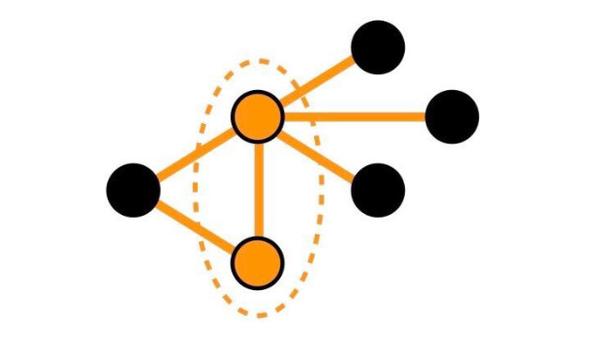
This project addresses the use of quantum technologies to tackle real-world optimisation problems.

In this blogpost, we give a simple practical example of cost-related trade-offs that can enter a quantum computing project.

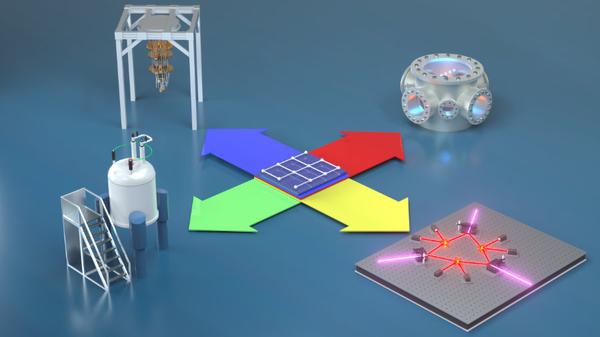


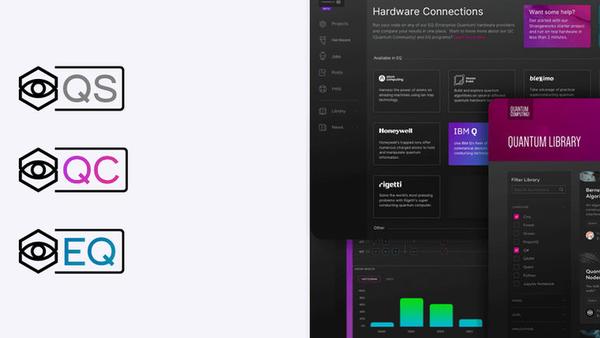
From May 21 - June 4, 2025
A two-week global competition designed to bring together the next generation of fault-tolerance architects.
Take on real-world quantum error correction (QEC) challenges using Entwine, our intuitive interface for designing, visualising, and testing QEC schemes.
Whether you’re a curious student, a seasoned researcher, or a developer exploring quantum frontiers, this is your chance to dive into the world of fault-tolerant quantum computing.